
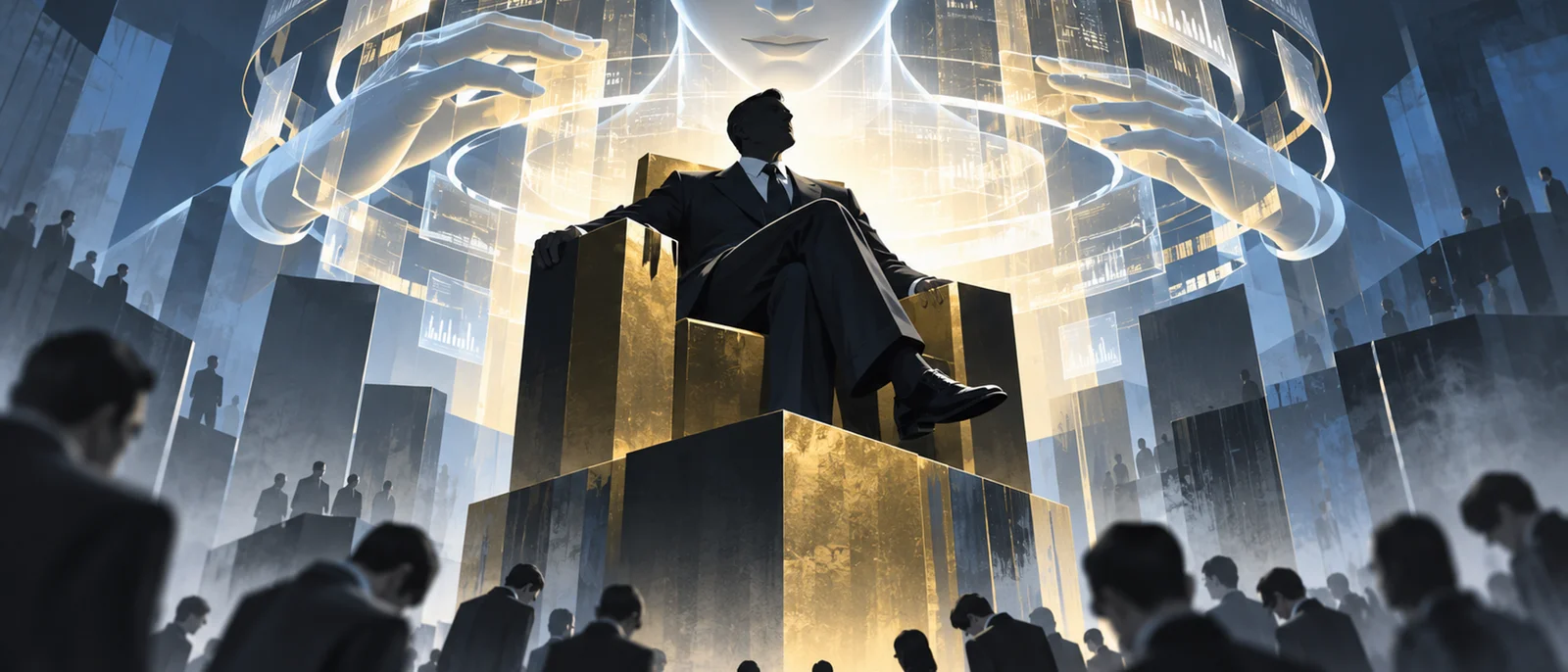
AI may be creating the ultimate corporate alibi:
The CEO makes the decision. AI makes it look like the only logical choice.
In the past, a strong-willed CEO still had to convince the board.
Now? Decide first. Prompt later. Adjust a few assumptions, and out comes a polished, data-rich business case.
Personal bias, now backed by charts.
The irony is that AI was supposed to make it easier to challenge authority.
And in some ways, it does. Managers can question forecasts. CFOs can test investment assumptions. Board members can explore alternative strategies.
But here's the catch:
AI makes good analysis cheaper. It doesn't make dissent easier.
A CEO's real power isn't knowing more than everyone else. It's deciding which interpretation of the facts becomes the company's strategy.
In well-governed companies, AI could strengthen checks and balances.
In poorly governed ones, it could become the ultimate justification machine.
There's another twist.
If every company uses similar AI models to find the same "optimal" strategy, they may all end up chasing the same opportunities.
When everyone discovers the same competitive edge, nobody has one.
Meanwhile, genuinely visionary CEOs could use AI to amplify their advantage even further.
So AI may narrow the gap in analytical capabilities while widening the gap in power.
The difference? Corporate governance.
Companies are racing to equip executives with AI.
Perhaps boards should be asking a more important question:
Who's going to challenge the CEO when AI appears to agree with everything?
The biggest risk isn't AI taking over the CEO's job.
It's AI making the CEO harder to challenge.