The FDE core
Field teams do more than demonstrate. They connect the real workflow, engineering work, acceptance evidence, and product feedback in one loop.


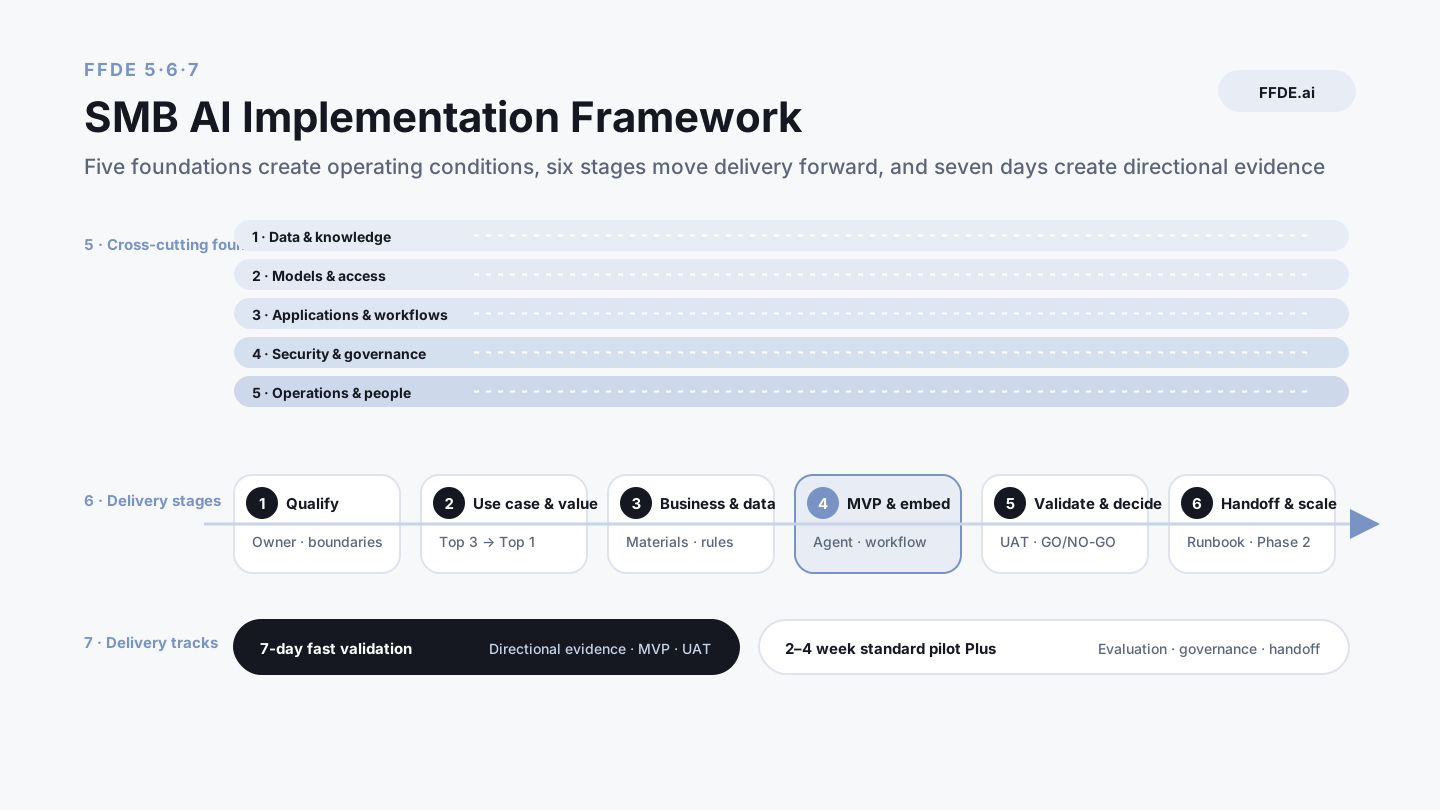
FFDE (Fortified Forward Deployed Engineering) first fortifies the conditions SMBs need for AI implementation. The public framework is 5·6·7: 5 AI foundations → 6 delivery stages (1–6) → 7-day fast validation, with a 2–4 week standard pilot when deeper evidence is needed. It is not feature stacking, but closing the gap between how you work today and how you should work in the AI era.
The original FDE idea brings engineering and product judgment into the customer’s real operating environment: define the problem with users, build and validate the system, then feed evidence from actual use back into product development. FFDE keeps that core and adds the operating conditions SMBs need.
Field teams do more than demonstrate. They connect the real workflow, engineering work, acceptance evidence, and product feedback in one loop.
Beyond field delivery, FFDE fills the gaps in use-case choice, data, governance, training, and handoff so the client team can operate and improve the capability.
If a product or AI team lacks a mechanism to enter business functions, drive adoption, and collect field feedback, FFDE can serve as its fortified forward-deployment partner.
The five foundations check operating conditions, the six stages move delivery forward, and the 7-day path creates directional evidence. The three service areas simply enter the same framework through different problems.
Focus on breaking through a real workflow, moving from use-case and value hypothesis to Agent embedding, acceptance, and handoff.
Check data, models, access, operating evidence, and team takeover across all five foundations; choose Rent, Orchestrate, Adapt, or Retain by risk.
Use capability and readiness assessment as the entry point, then embed leadership judgment, role practice, knowledge translation, and operations training into the right stages.
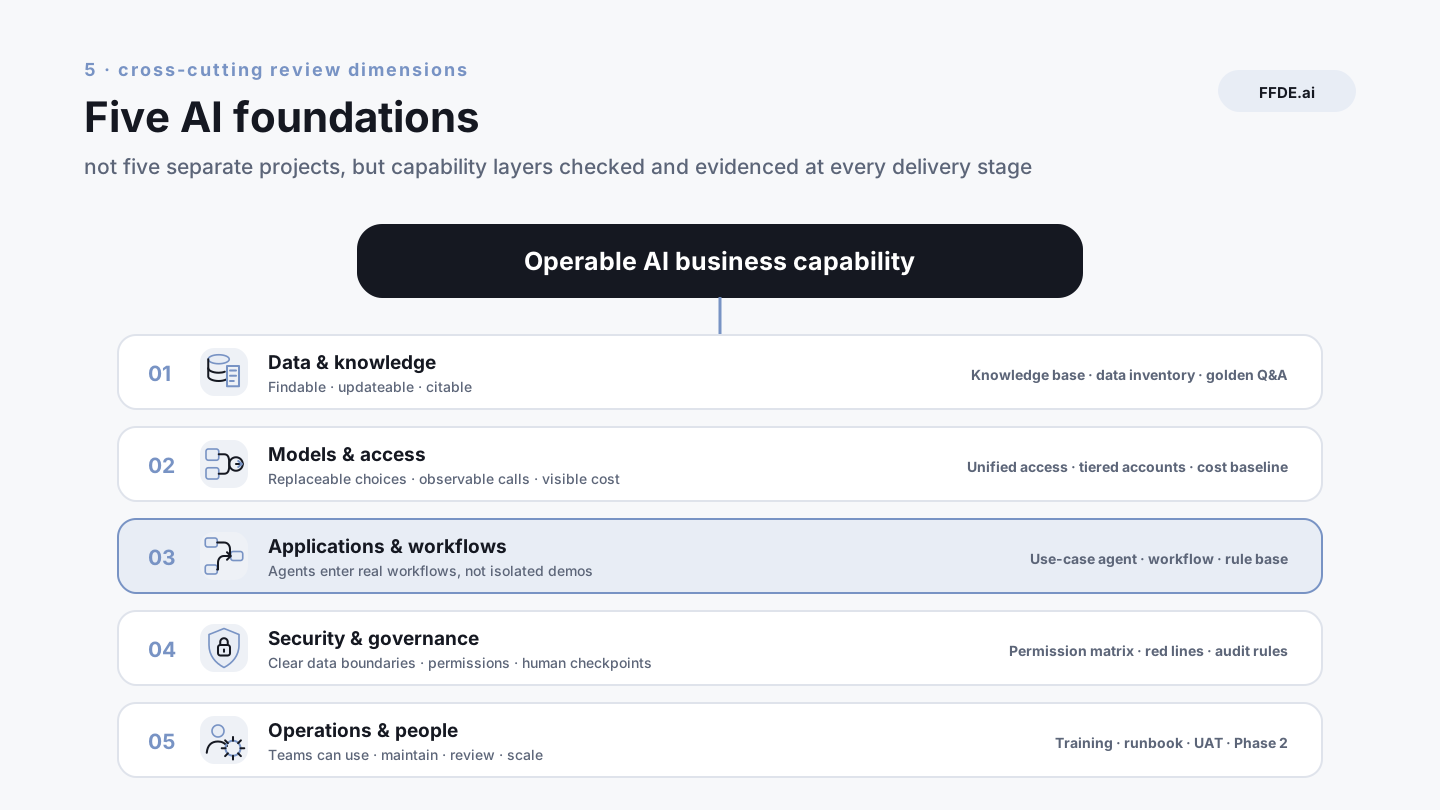
Tools alone do not create lasting value. Usable AI foundation = ② LLM Platform + ① Data & Knowledge + ③ Tools & Applications + ④ Governance & Security + ⑤ People & Processes; missing any pillar, pilots stall or get abandoned.
Every FFDE project documents three things: current process, target state, and the verifiable gap this phase closes. At kickoff we freeze Spec (scope), Eval (acceptance criteria), and Handoff (transfer conditions). Requirements that cannot map to a business gap do not enter current scope.
| # | Pillar | Definition | Typical deliverables | Acceptance focus |
|---|---|---|---|---|
| ① | Data & Knowledge | Document/ledger standards + private RAG | Knowledge base, spreadsheet templates, golden Q&A | Accurate answers, traceable sources |
| ② | LLM Platform | Cloud APIs, unified gateway, governable selection | Gateway config, tiered accounts, cost baseline | Single entry point, visible cost |
| ③ | Tools & Applications | Scenario Agents + workflow embedding | Scenario Agents, automation flows, prompt library | Embedded in daily work |
| ④ | Governance & Security | Access, red lines, audit | Permission matrix, security policy, compliance red lines | Rules for sensitive data |
| ⑤ | People & Processes | Training, SOPs, ROI, handoff | Runbook, training notes, UAT, Phase 2 plan | Team can run and iterate |
Sovereign AI is not a blanket “put everything on-prem” rule. It is a staged way to gain control over data boundaries, model routing, operating evidence, and the team's ability to take over — in proportion to business risk.
Use cloud models for low-risk, non-core work and get directional evidence quickly.
Unify access, permissions, cost, logs, and model routing to reduce sprawl and lock-in.
When stable output, sensitive fields, or domain rules matter, consider private models, SLMs, or LoRA.
For critical workflows, retain control of the data boundary, evaluation baseline, runbook, and iteration loop — not just an account.
Read: Why Sovereign AI is not the same as private deployment →
6 stages (1–6) apply to all FFDE services — from qualification to operable capability. The 7-day path compresses depth; the 2–4 week standard pilot adds fuller evaluation and evidence in stages 5–6. See also pilot timeline FAQ.
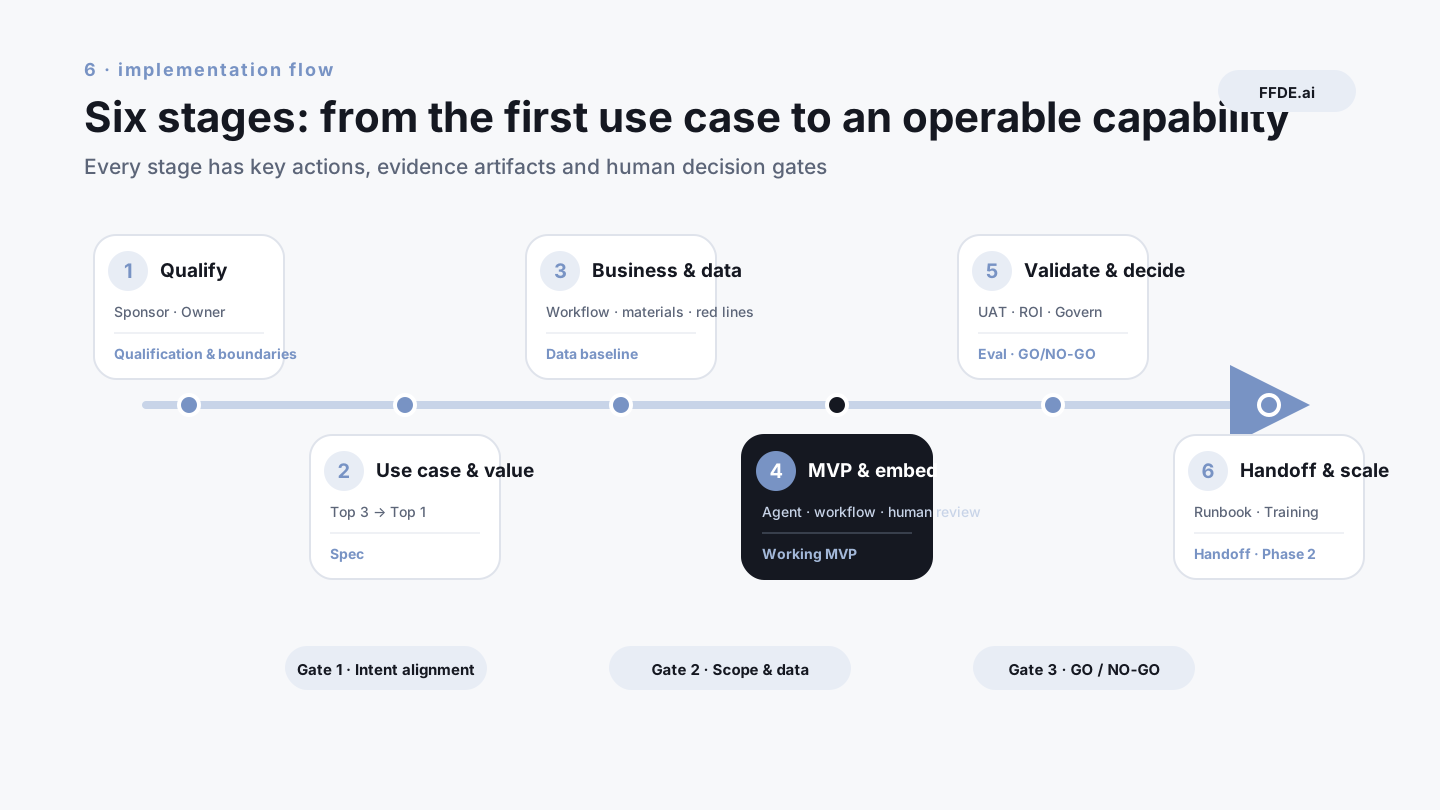
Confirm Sponsor, business owner, acceptance signatory, and IT contact; assess Agent/RAG fit, data sensitivity, deployment mode; draft graduation criteria (timeline, value metrics, activation observation window).
Top 3 → Top 1 matrix with scene-fit three checks; freeze Spec, Eval, Handoff; intent alignment gate signed by acceptance owner.
Site survey (process, documents, data red lines); knowledge base and golden Q&A; unified model gateway, account tiers, security baseline; scope confirmation gate with Out of Scope in writing.
Single-scenario main path build and integration; connect existing entry points; high-risk steps as copilot (human review); exception handling and refusal rules.
UAT, golden evaluation, access/red-line spot checks; five-dimension ROI review and GO/NO-GO. Acceptance is signed here; activation starts trial and baseline — long-term observation can sit in graduation criteria (e.g. 2–4 weeks post-pilot).
Runbook, owner training, knowledge updates and eval baseline; acceptance report and evidence archive; activation rate review and Phase 2 roadmap.
| 7-day calendar | Stages | Focus (always the same Top 1 scenario) |
|---|---|---|
| Day 1 | 1 + 2 | Kickoff, Top 3→Top 1, graduation criteria, intent alignment, unified gateway draft |
| Day 2 | 3 | Real samples in KB, RAG, golden Q&A, data red lines |
| Days 3–5 | 4 | Same Top 1 main path: build → integrate → business trial (not parallel office/finance/sales layers) |
| Day 6 | 5 | Access matrix, audit, compliance red lines |
| Day 7 | 5 + 6 | UAT, GO/NO-GO, training handoff, ROI review, Phase 2 recommendations |
Note: by Day 7 you complete acceptance sign-off (stage 5). Activation targets in graduation criteria may include a post-pilot observation window — stable daily use by everyone on Day 7 is not required.
Within 7 days, run a minimum viable version of all 5 pillars around the frozen Top 1 scenario: Agent demonstrable and UAT-ready, plus ROI narrative and Phase 2 recommendations. Daily playbook below.
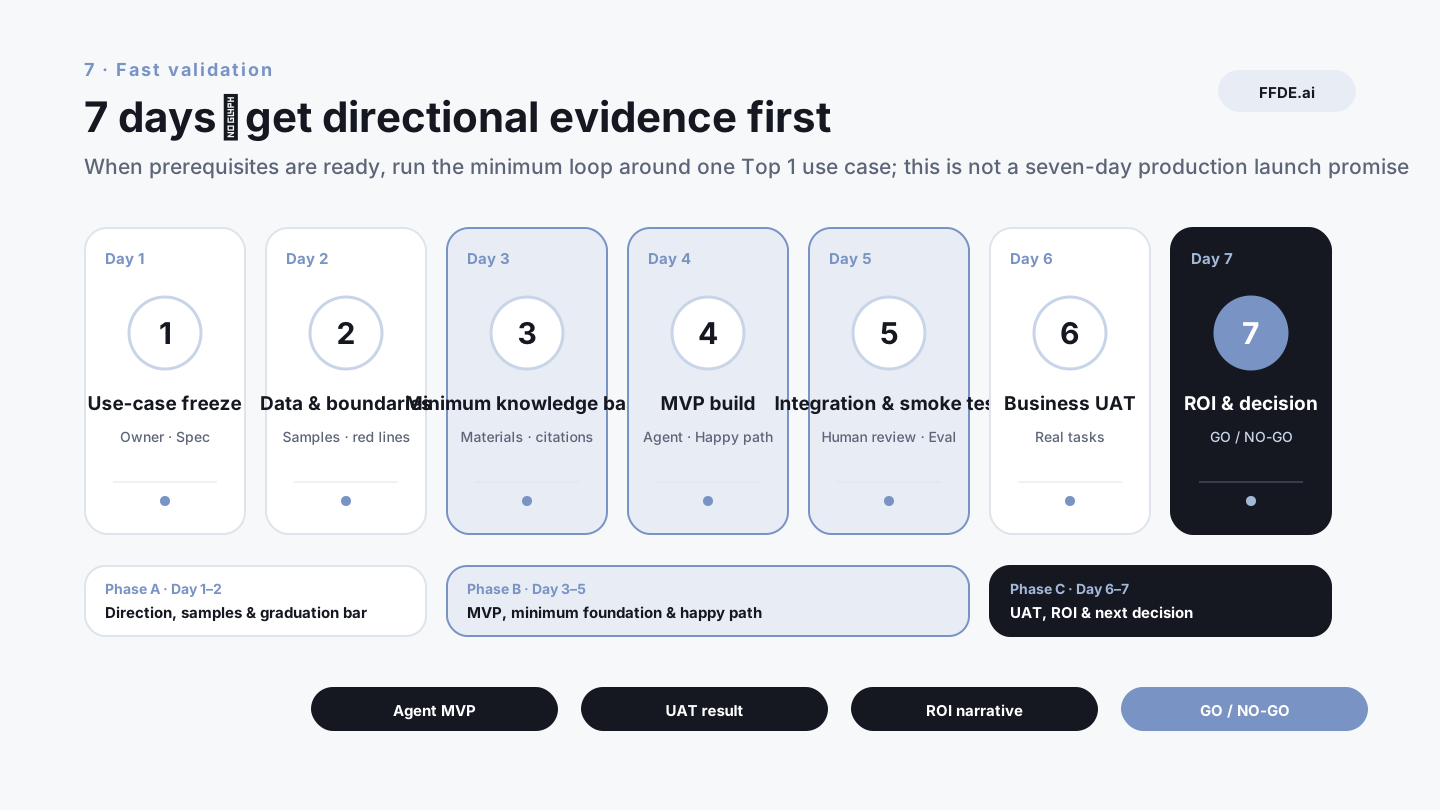
Note: Days 3–5 always focus on the same Top 1 business scenario; office, finance, and sales are common candidate directions only. Out-of-scope needs go to Phase 2 — not parallel stacks during the pilot.
Most AI projects fail on problem selection, not model quality. FFDE filters candidates with a three-part scene fit check — used with the Top 3 workshop matrix.
It must be a specific person’s specific pain — e.g. “the support lead spends 3 hours every Monday consolidating tickets,” not “improve support efficiency.”
Estimate weekly hours saved, cost of errors, or a KPI leadership cares about. Pain without a number rarely survives the next budget cycle.
Where is the data, who owns it, what sensitivity applies, and what accuracy bar is needed (90% + human review vs 99% automated).
See How to choose your first use case · Prerequisites before you build an Agent
AI accelerates execution; three decision gates require human sign-off: intent alignment (kickoff) → scope confirmation (before build) → GO/NO-GO (acceptance). Final bar: one Agent MVP + ROI review + release decision. See How to accept a pilot.
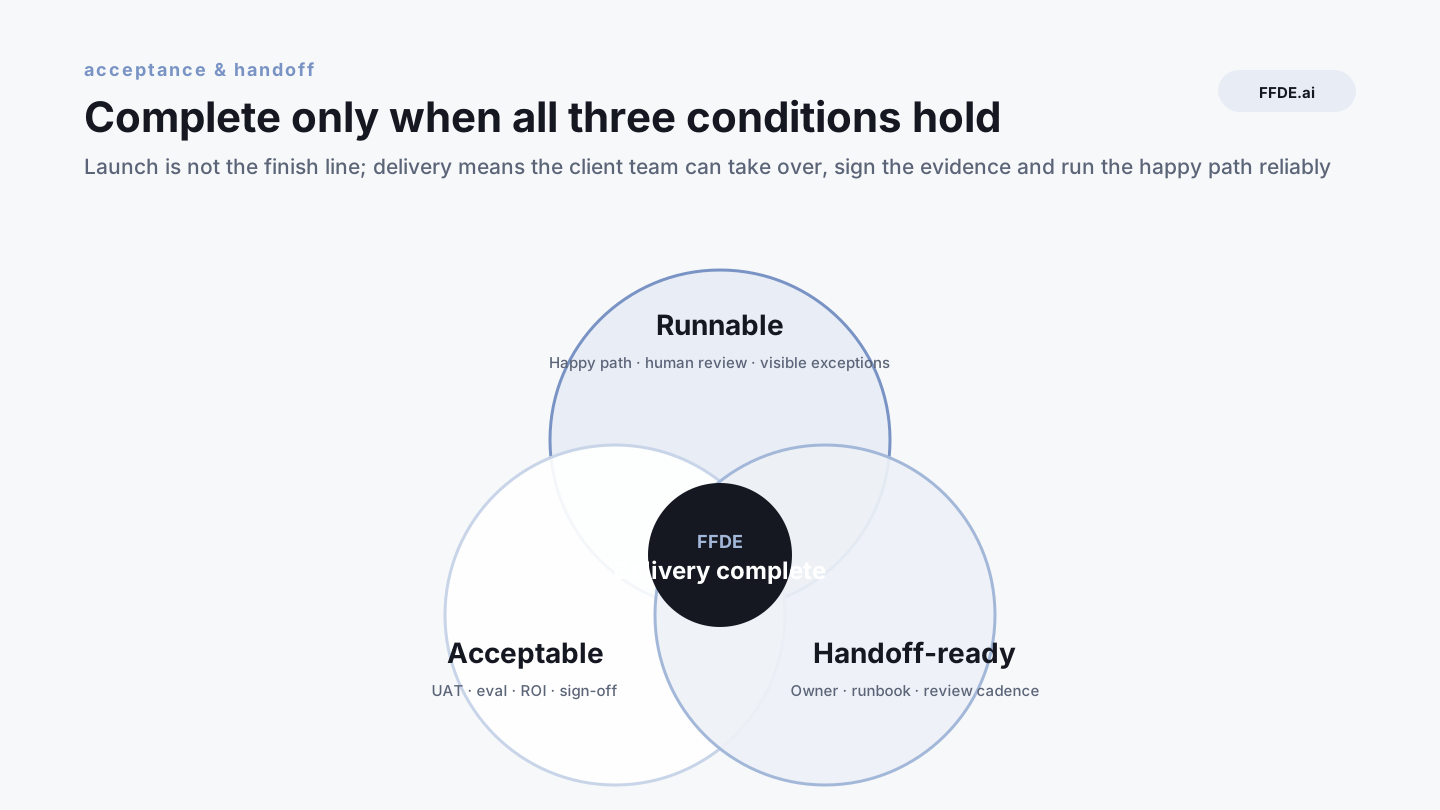
Agree in writing at kickoff: timeline cap, value metrics, activation goals. Meet them → expand; miss → exit cleanly and archive — no endless PoC.
Provisioning accounts is administrative launch. Activation means target users use the system in daily work — we track activation rate (target users as denominator, not account count).
For high-risk flows, start with “AI drafts + human confirms,” then raise automation as trust builds — lower resistance, higher adoption.
Define scenario and acceptance first, build the Agent MVP, then iterate via training, governance, and a reusable standard pack.
Data classification, Agent least privilege, human review on critical outputs — security built into the flow, not patched later.
Five-dimension review: efficiency, quality, cycle time, cost, and knowledge assets — then Phase 2, not endless PoC.
AI does not organize tacit knowledge or resolve process disputes by itself. Before build, FFDE makes inputs, owners, rules, and exceptions locatable and confirmable — only then can AI enter daily workflows reliably.
Map data sources, key fields, and real workflows — separate official rules from habits and stale practice.
Confirm standard actions, exceptions, and decision boundaries with the business owner; capture in Spec and acceptance samples.
Start one high-frequency, lower-risk scenario; connect data, access, and workflow; expand after UAT and handoff.
Most use cases succeed with prompt engineering first, then RAG. When you need stable JSON, multi-label classification, evidence spans, or sensitive-field detection and prompt tuning still wobbles, we move to a controlled path: corpus → teacher pre-label → human Gold → holdout → LoRA → same Gold-set evaluation. This is not knowledge-base Q&A — you are training output shape and business rules, not indexing documents.
Output schema is frozen; production needs parseable structure; human Gold samples exist; errors are reviewable and reversible.
Teacher pre-labels speed up work — they are not ground truth. Human Gold is holdout-only — never training labels. Reference drafts are read-only — annotators must not copy teacher fields.
After Gold freeze: base-model baseline → LoRA fine-tune → same Gold set for JSON validity, field accuracy, and related metrics — written into the acceptance report, not “it feels better.”
| Steps | What happens | Gate (summary) |
|---|---|---|
| 1–2 | Corpus intake & de-identification; freeze output schema and annotation rubric | Provenance traceable; rubric signed by business owner |
| 3–4 | Teacher model batch pre-label + automated validation / audit | Structural validity meets bar; failures routed to priority queue |
| 5–6 | Human Gold review; lock holdout (by sample id and content hash) | Validation pass; holdout version frozen before training |
| 7–8 | Train LoRA on non-holdout teacher labels; baseline vs fine-tuned evaluation | No holdout leakage; comparison report in evidence pack |
Who does the labeling? High-volume field work is often done by interns, part-timers, or outsourced teams — that is normal in the industry. Quality depends on process, not on who is cheapest: calibration sessions before scale-up, validate-on-save, honeypot items in the queue, dual annotation with adjudication, expert spot checks, and batch freeze before expanding volume. Schema design, high-risk semantics, and acceptance sign-off stay with domain experts and the business owner.
Note: synthetic pilot corpora validate the pipeline only — not production claims. Formal projects use customer de-identified real data with agreed sample size and acceptance thresholds.
FAQ: When do you need human annotation and small-model fine-tuning? →
FFDE applies 12-Factor Agents (Dex Horthy / HumanLayer): most agents stall at demo because prompts, context, control flow, and state are hidden in framework black boxes — not because the model isn’t smart enough. Production-ready delivery = mostly deterministic software with LLM steps at the right points, aligned with Spec/Eval/Handoff and human gates.
LLM as pure function → context engineering; Agent as software → Sidecar + structured next step; own control flow → pause and human review.
One Agent MVP per use case; main path ~3–20 steps — context, tools, state, errors, control flow.
Query steps may continue; writes and external publish must pause — human approval as a first-class tool, matching the three gates.
Short decision chain, want a single-scene win first → 7-day fast validation. Need formal acceptance and full pillars → 2–4 week standard pilot. Same methodology; difference is depth and evidence requirements.
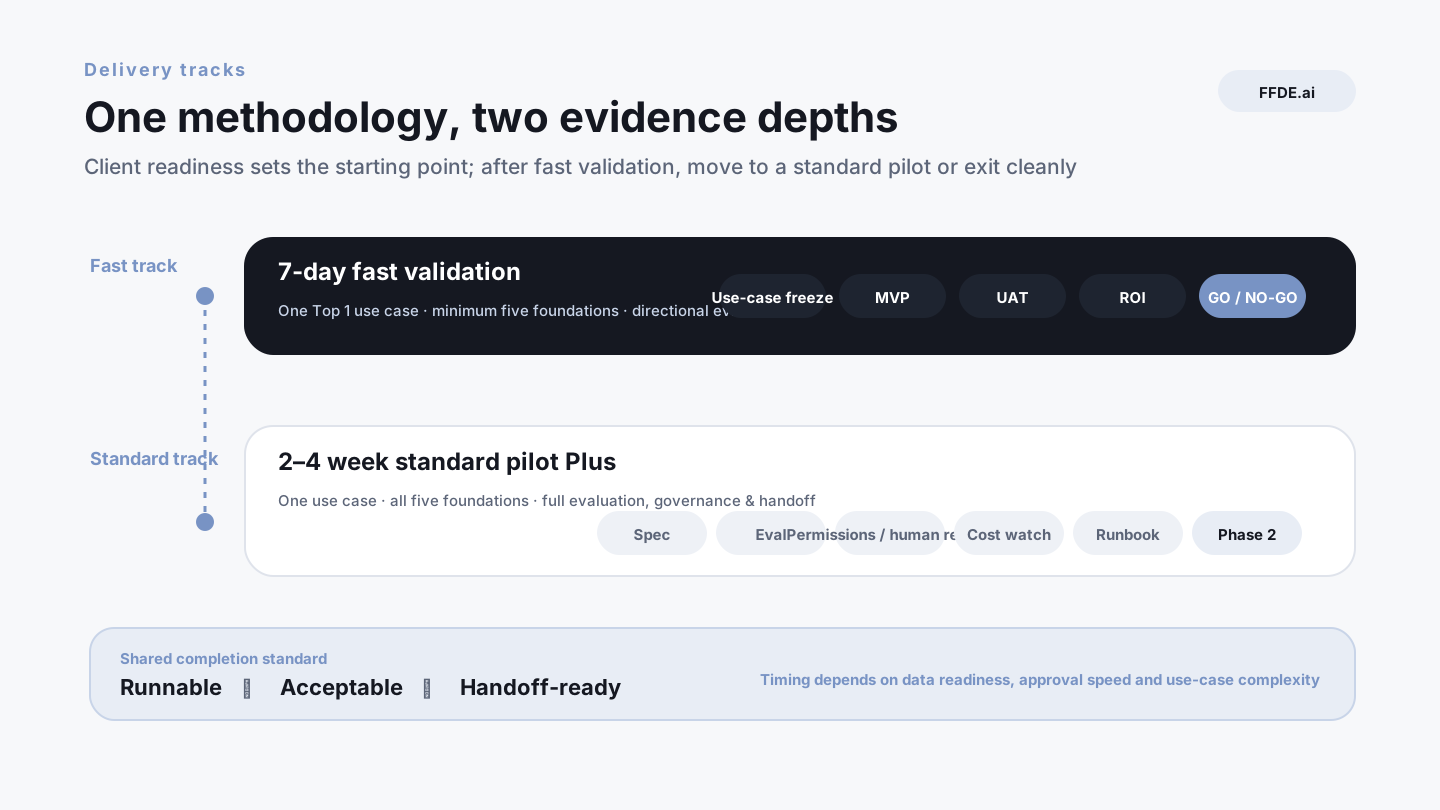
| Dimension | 7-day fast validation | 2–4 week standard pilot |
|---|---|---|
| Best for | Short decision chain, want to see results fast | Formal acceptance and complete pillars |
| Scenarios | Usually one high-ROI scenario | One scenario + fuller evaluation & evidence |
| 5 pillars | Minimum viable version of all 5 | Full 5-pillar review + handoff materials |
| Acceptance | Agent MVP + UAT + ROI narrative + GO/NO-GO | Agent MVP + five-dimension ROI review + acceptance report + Phase 2 |
Business problems first, governance first, embedded collaboration, small pod fast decisions, platform-neutral transparent cost — across both tracks.
Each sprint aligns to one measurable business metric.
Acceptance criteria and data red lines frozen before build; critical outputs keep human review.
Engineers work in your rhythm — not outsourced tickets.
Few layers, fast feedback — suited to SMB organizations.
No single-vendor lock-in; observable token and resource usage.
Without data foundation, security rules, and ops, chatbots quickly answer wrong or go unmaintained.
30-minute free consultation — assess status, align priorities, outline a path. No hard sell — just your use case.
Book a free consultation