
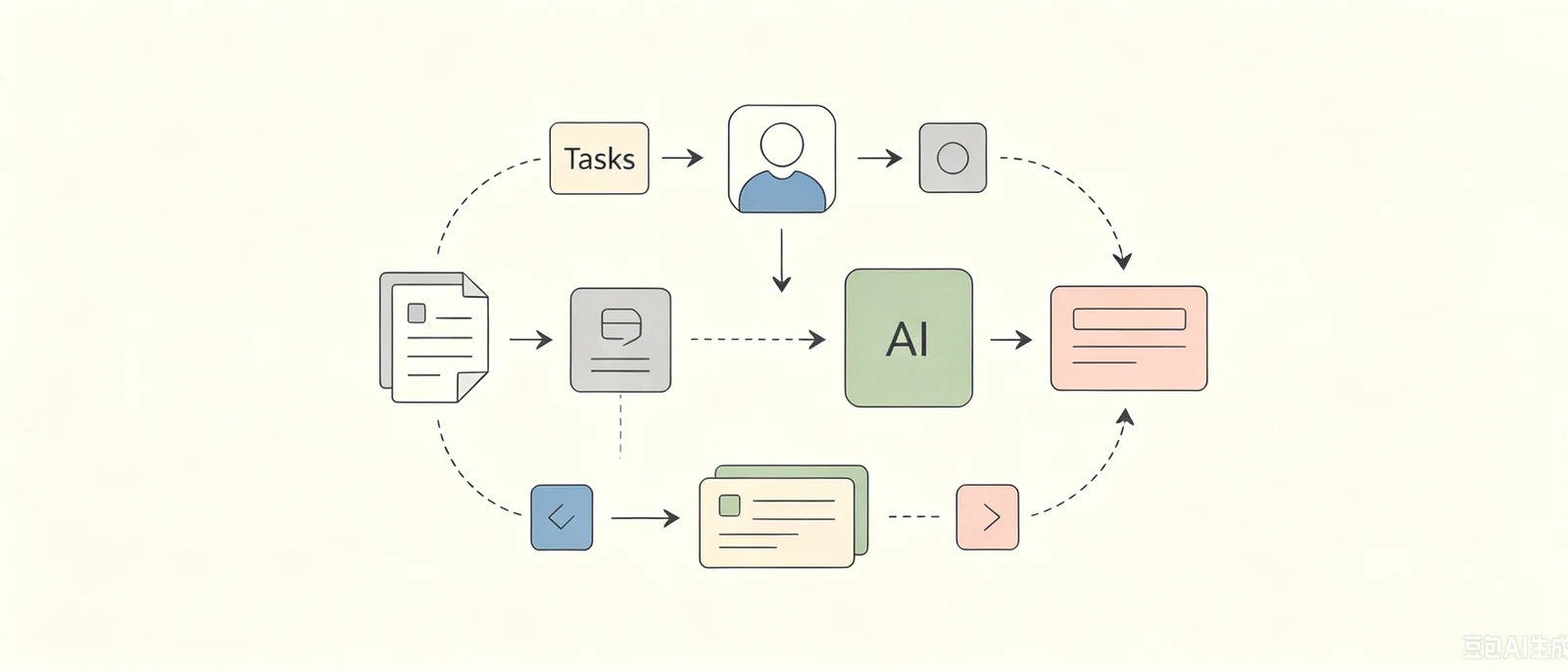
Consider a common request: a customer-service team leader wants an agent to review every escalated complaint each week and prepare a management report.
The architecture looks straightforward. The agent reads several systems, assesses severity, groups the causes and sends a draft to the service lead. A credible demo could be ready quickly.
Then the field questions begin.
“Escalated” does not mean the same thing to everyone. Customer service looks at customer sentiment. Sales looks at renewal risk. Delivery looks at operational impact. Some accounts also have contract-specific handling rules.
If the agent spots an exception, may it only flag the case, or can it change the ticket status? If the report misses one serious item, who is expected to catch it? And who decides that the draft is safe to use in a management meeting?
No model can settle those questions for the company. They concern definitions, authority, ownership and consequence—and much of that knowledge exists only in the experience of different employees.
Human-in-the-Loop Is Not a Compromise
When the problem is unclear, faster building can simply result in faster rework.
This is where strong engineers can find FDE work uncomfortable. Engineering training rewards reliable solutions to defined problems. In the field, the client may not yet have one shared definition of the problem.
Before designing the escalation agent, an FDE could take fifty real cases from the previous week and review them with the service lead. Why did this case count as an escalation while another did not? Who decided the contract exception? What happened after the report was produced?
That walkthrough may reveal that the right first release is not an autonomous weekly report. It is a traceable draft. The agent gathers the information and shows its evidence. The service lead reviews the highest-risk cases. Sales and delivery handle only the exceptions they own. More authority can be added after the definitions stabilize, omissions can be measured and ownership is explicit.
That is not conservative, and it is not a workaround. It is how automation enters a real process instead of remaining a demo.
The field will not wait until every dataset is clean, every process is standardized and every responsibility is undisputed. FDE work has to move forward under incomplete conditions without allowing technology to conceal unresolved organizational problems.
Sometimes that means keeping a human approval. Sometimes the agent should draft but not act. Sometimes inconsistent definitions make the workflow unready to build. Sometimes an attractive feature should be taken out of scope.
The decision is not based only on whether AI can do the task. Business consequence, technical reliability and the team's ability to operate the result all have to support it.
The practical discipline is simple: account for the people in the process, and be willing to say no.
Trust Is Part of the System Design
Many AI systems look impressive in a demo and still fail to earn active daily use. Employees may not be resisting change. They may simply lack credible answers to practical questions: What evidence produced this result? Can I spot and correct an error? Who approves the action? What happens when the system is uncertain? Can we return to the previous process?
Sources, review points, visible failure states, logs and rollback are not engineering details to add just before launch. They determine whether employees will rely on the workflow and whether an owner will accept responsibility for its output.
As models improve and prototypes become easier, field delivery depends even more on judgment that cannot be generated on demand. Ownership, exceptions, trust and operating habits are not “non-technical blockers.” They are part of the system.
Before discussing models for a new AI use case, follow one real user through the task from beginning to end. Write down three things: 1.) the decisions being made, 2.) the exceptions being handled, and 3.) the person accountable for the outcome.
That is often where FDE work begins.
If you found this useful, please like, follow, and share it with your network. Visit ffde.ai to learn more.